One Brain Cell: Looking Outwards
Surprises every corner, delightful nights and days


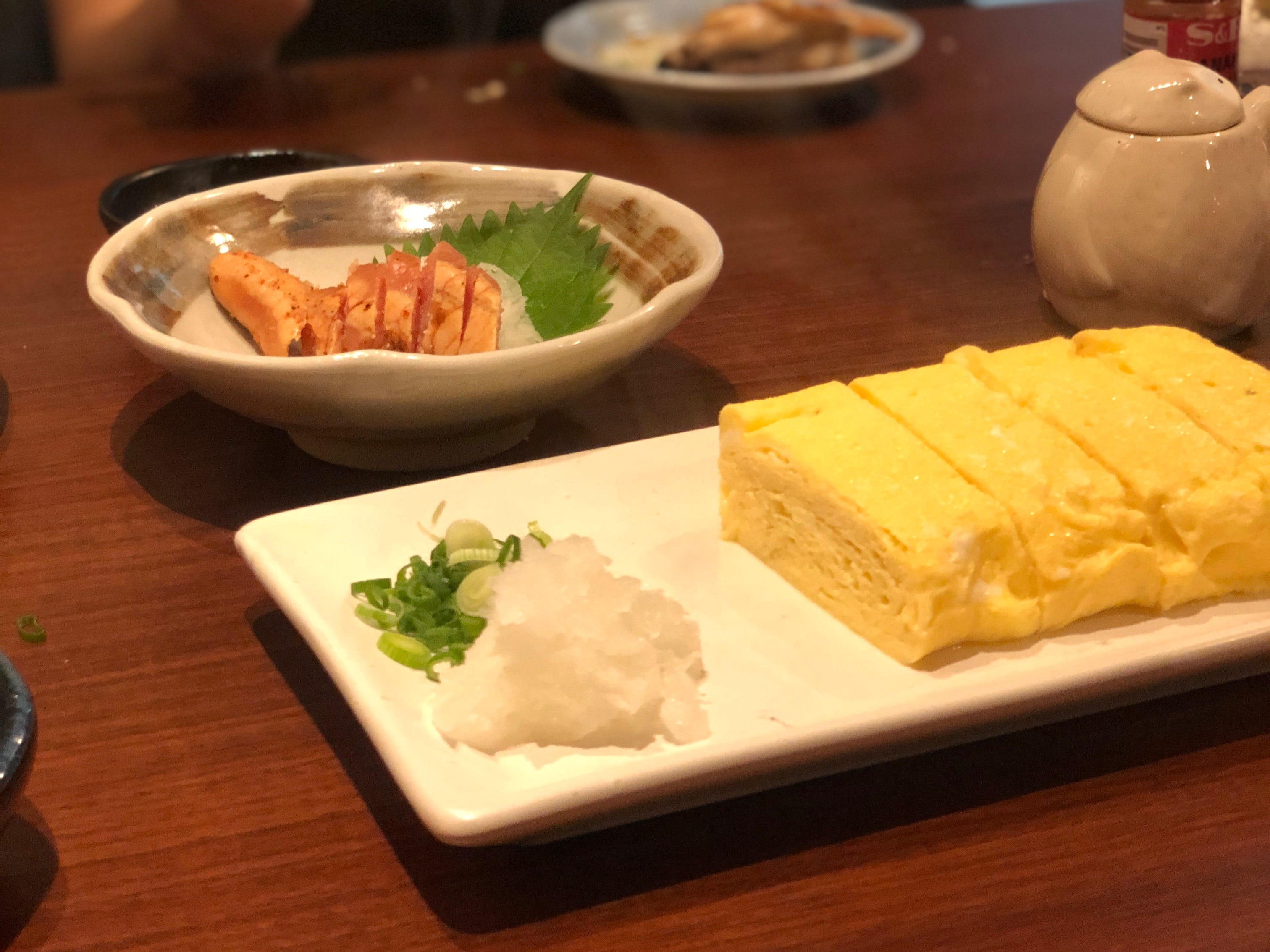
This month was a bit more jubilant than the previous, with National Day songs filling the house [sh: I want to clarify that this was 100% on glo] and the eager anticipation of being able to eat out again. Strangely we still managed to consume media more than usual, and here’re our top picks.
10 things that inspired us this month
The Champion Who Picked a Date to Die. How can someone so full of life also want to choose to die? NYT journalists document Paralympic multiple gold medallist Marieke Vervoort’s assisted suicide and the “strange, strange feeling” around it. To me, the story is about reclaiming agency over — to have the option to end the unbearable uncontrollable pain, to use one’s public platform to shed light on euthanasia, to choose how one wants to die (last meal: Maltesers. last tribute: a comedian explicitly told to tell a dirty joke). Does any of that take away from the remarkable life that was lived? – glo
Paralympian Yip Pin Xiu on disability inclusion, her groundbreaking political career and what she’ll do next. Honestly, I have nothing deep to say about this article, nothing more than can be understood by Yip Pin Xiu’s entire career. Mostly I was moved by how 🔥 she looks in these photos, and the power of image to reinforce dignity. – sh (h/t to Nicole, who shared a great photo of Pin Xiu and led me looking for more)
Miniskirts and Mujahideen: how did Afghanistan come to be defined by war? I have to admit that I wasn’t too informed about Afghanistan prior to this month. How geography has shaped much of its history: ”a place on the edge of every place”, where many did not want to occupy, but sought control over because they didn’t want their enemies doing so. There’s much to be said about the atrocities of the Taliban and the impact on women there - within this historical context, I wonder how the Afghan people will be able to find their own destiny in this cycle of history. – glo (h/t to Joyce who sent a separate SMH article that led to this one)
How America Fractured Into Four Parts. I don’t agree with every part of George Packer’s lyrical, triumphant essay, but I appreciate the way it takes a step back from the screaming demographics-based attempts to explain the great horror of the turns America has taken. It’s the language; it’s the storytelling; it’s the way things are named and built upon, chapter after chapter. – sh (h/t to our pal LHL, who mentioned it in his Aspen Security Summit dialogue)
Superking Son Scores Again. Anthony Veasna So paints a vivid picture of a group of Cambodian-American teenage boys in Stockton watching their role-model-badminton-extraordinaire-coach crumble into a sad pile of jealousy and humiliation. I really like how So provides an undercurrent of their heritage in this slice-of-life short story without necessarily screaming out loud, making it feel very real. So’s a Stanford alum with a highly complex and slightly inscrutable character, who at the precipice of his ascent died prematurely of a drug overdose. Reading the story made me think of all the richness he could bring to the world, experience himself, that just would never happen. – glo (h/t to Laura who indulged in my rabbit hole on Anthony So)
Men. When a video’s title is a singular word, expect a lot. And Contrapoints delivers with aplomb. Natalie Wynn combines her personal insights as a trans woman and her remarkable ability to break down complex philosophical arguments to help ignorant people like me understand that all the (wonderful and incontrovertible) progress has destabilized the first principles on which gender as we know it operates. And that we’re in the midst of possibly redefining some of those first principles, with no aspirational ideal at the moment. Somehow, she manages to make this very dry idea ridiculously engaging, with Hegel and bathtubs with rose petals and Grindr notification tones and Matrix references in one breath. 100% worth a watch. – glo (h/t to Nikhil)
I Don’t Understand the God Part. There’s a whole three to four paragraphs where Lauren Berlant waxes lyrical about amour fou, which you really only deserve to read if you click through to the full interview, but before that there is this paragraph which — well: “I am a person of the world. I am interested in the flourishing of beings in the context of lives that they are hammering out in the present. I am interested in the ways people find sustenance and make survival happen in worlds that are not organized for them. I am interested in why people stay attached to lives that don’t work, as though people would not survive the wholesale transformation of those attachments and the lives built around them, as though they would rather be miserable, stuck, or numb than tipped over in the middle of invention. Making worlds is very hard and losing them is devastating. In the middle, one has to build confidence or just habits that allow rest and coasting amidst the labor of making. So much of what we do demands inattention (our current emphasis on mindfulness neglects the mind’s need for incoherence, to rest, coast, spread out, incohere).” – sh
Super Apps in Southeast Asia Part 2: Balancing The Weight Of Optionality. At work, we have always asked ourselves what is the end goal of government digital services. In our naive view, things seem to be guided by the ultimate goal of domination for its own sake. I love how this article breaks down domination elegantly: scale, profitability and endurance. The central thesis of the article is that super apps build optionality to do so, and hyper-vertical expansion is the way to go. Which basically means, conquer your vertical rather than shallowly expanding horizontally (e.g. build multiple services for car owners, rather than A for car owners, B for pet owners, and C for home owners). Do these concepts apply to government apps? Curious to hear what you think. – glo (h/t to SH)
They love their job, reading to cigar workers in Cuba. This a small little gem of a story, and I love it so much. Collective labour-led decisions? A national institution of culture? Political revolution? I want to live in a world where anyone of any labour class can deeply love and believe in literature. Maybe it’s the kind of history that makes a world worth living in, or maybe I’m just a good old book nerd. – sh
Workers in the Global South are making a living playing the blockchain game Axie Infinity. Another kind of job, shaped by another kind of desire and desperation. It’s a whole movement towards the metaverse (shout out to Garbage Day for drilling the term in my head), a kind of world flipped upside down: In-world currency, startups, employees, “scholarships”, all powering real-world lives. – sh (h/t to Manny, who sent me another article from ROW)
All opinions are purely our own and do not represent any of the organisations we are affiliated to, in case that wasn’t already clear. All gratitude and internet points and sponsorships, however, are most welcome.
- glo & sh
📣 BONUS: BIRTHDAY GUEST POST 📣
Syntax & Sage. Gloria lent me book. Book say how software like nature and art. Book say software can do the bad bad if people no do the think think. Book gave I new think think on how software do the change change on human behavior and culture. Book say software is cyclical like nature. Simple API not end when API code do the stop stop. It can talk to other API and do the big big thing by doing own small small part. It like ant! Each ant can do the small small thing but multiple ant can bring down big tree tree. It short and good book. Does want know how software can do the good good? Go read good book. - jovi